


The nature of human violence tears apart our species

Saida Lastenia Mantilla Ojeda. PhD.
Neuroscientist and Neuro-Criminologist. Master’s in Legal Psychology. Master’s in Psychology. Psychologist (research line in legal psychology and criminology). PhD. Theologian. Lawyer. Private Investigator. Professional Expert Witness. International Consular Correspondent of the Inter-American Federation of Journalism (FIP), and Peace Ambassador of the aforementioned federative institution. Coach in the cultivation of Applied Emotional Intelligence. Expert in criminal profiling, suicidal behavior, analysis of criminal behavior, victimology, violentology, judicial investigation, gender and domestic violence, child and adolescent behavioral deviation, Human Rights (HR) and International Humanitarian Law (IHL); sexual crimes, child graphology, and adult handwriting/signature analysis. Legal advisor […]. International university professor. International instructor in police training and continuing education. International writer and lecturer.
Historical Foundations of Crime and Victimization
Crime has existed since ancient times in human history as a violation of the norm, and along with it, as a consequence, the victim emerges. In this regard, it is important to recall that in the times of the patriarchs (biblical figures), women were used as objects of sexual gratification.
Emblematic Cases of the Patriarchal Era

The Case of Dinah: For instance, Dinah (daughter of Jacob and Leah), who was dishonored (raped) and later repudiated (rejected) by the society of that time (Reina & Valera, 1960), since men held rights over women. For that reason, uxoricides were also committed (a man could kill his wife without facing any penalty) (Mantilla, 2013).

The Levite’s Concubine: It is worth mentioning the case of the Levite’s concubine (the Levites played an essential role as ministers of worship and guardians of God’s knowledge and law among the tribes of Israel), from the tribe of Levi (a priestly lineage). The Levite was resting, and the place where he was staying was besieged by evildoers who wanted to strip him of his wealth and then kill him (Reina & Valera, 1960).

In order to primarily preserve the Levite’s life, his concubine was offered instead. Thus, she was taken by the group of men, who mercilessly raped her systematically throughout the night until dawn the following day. After this violent sexual assault, the woman was abandoned and found lifeless (Reina & Valera, 1960). Subsequently, the Levite, taking a knife, cut the cold, lifeless body of the woman who had been his concubine and companion for years, and then proceeded to scatter each piece of her body across twelve regions of the territory of Israel (Reina & Valera, 1960; Mantilla, 2013).

Contemporary Manifestations: The Case of the Motilones
In times closer to our own, we find various ethnic groups, such as the Motilones, who inhabit the jungles of the Catatumbo River, on both sides of the border between Colombia and Venezuela (in the north of Santander). This tribe violently subjugates its women in order to systematically access them sexually.
When any of them resists, she is punished through whipping. In some cases, and depending on whom she dared to resist, it is likely that she ends up impaled. It should be noted that impalement is a practice that nowadays is carried out by very few ethnic groups (Chalbaud, 1997; Santos, 2005; Mantilla, 2013).
The Evolution and Refinement of Human Violence

In Addition to the Above It should be noted that nowadays human violence has surpassed that of the past, since humankind has “perfected” the predatory behavior of those who exercise it (white-collar or golden-collar personalities, among others). Consequently, just as in the times of the gladiators who terrorized society with their grotesque, malevolent, and deplorable spectacles, at present many acts of cruel violence carried out against populations, communities, races, societies, and nations remain invisible—transgressions that repeatedly violate Human Rights (HR) and International Humanitarian Law (IHL).
The Contemporary Crisis of Values

Unfortunately, the outlook for present and future humanity is not perceived with optimism. Human coldness, the loss of respect for one’s neighbor, indifference to values, the lack of fear of God, disregard for authorities, and even the absence of respect and value for one’s own life, have led humanity, in both its individual and collective imagination, to indirectly adopt a state of learned hopelessness.
Communicative Manifestations of Social Degradation
In this context, it is not surprising that in various conversations or information exchanges—whether people choose to communicate verbally, paraverbally, gesturally, or physically—most do so in a negative manner. The corpus of their words turns out to be coarse, dismissive, stigmatizing; their expressions offensive and intimidating.
Hakuna Matata: From Swahili Philosophy to a Contemporary Syndrome
Hakuna Matata
The expression Hakuna Matata, originating from Swahili—the predominant lingua franca of East African nations, including Kenya, Tanzania, and Uganda—constitutes a phrase of profound cultural significance that literally means: absence of troubles or lack of worries. This phrase is composed of two lexical elements: Hakuna, which denotes negation or inexistence, and Matata, which refers to difficulties or disturbances.
With its authentic cultural meaning in the original context, this expression transcends mere everyday communication to become a philosophical principle that embodies the Swahili worldview.
Hakuna Matata represents a manifestation of serenity, equanimity, and hopeful resignation, suggesting the transitory nature of adversities. This expression reflects ancestral wisdom that invites a serene acceptance of circumstances, while maintaining confidence that tribulations are ephemeral.
Decontextualization and Trivialization
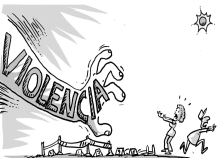
Nevertheless, in the contemporary sociocultural sphere—particularly in the West—this venerable expression has undergone a semantic metamorphosis that distances it considerably from its original essence. The superficial and folklorized adoption of Hakuna Matata has given rise to what Dr. Saida L. Mantilla Ojeda has termed the “Hakuna Matata Syndrome”—a hedonistic interpretation that promotes absolute permissiveness, unrestrained hedonism, and the evasion of responsibilities.
Decontextualization and Trivialization
Nevertheless, in the contemporary sociocultural sphere—particularly in the West—this venerable expression has undergone a semantic metamorphosis that distances it considerably from its original essence. The superficial and folklorized adoption of Hakuna Matata has given rise to what Dr. Saida L. Mantilla Ojeda has termed the “Hakuna Matata Syndrome”—a hedonistic interpretation that promotes absolute permissiveness, unrestrained hedonism, and the evasion of responsibilities.
Persistence of Violence in Modern History
The Systematic Brutality of Violence
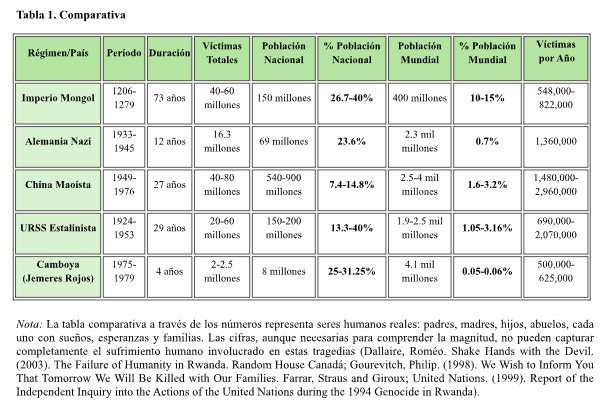
Contemporary history records episodes of mass violence that constitute the most extreme manifestations of humanity’s destructive capacity. These events, characterized by their systematic nature and magnitude, reveal the darkest dimension of collective behavior and represent indelible scars in the course of humankind.
Prelude to State Terror (1924–1953) in the Stalinist Era
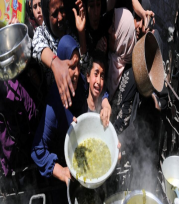
The Soviet Union, under the aegis of Joseph Stalin, inaugurated an era of unprecedented systematic repression. During three decades of relentless authoritarianism, the Soviet regime implemented policies of organized elimination that included mass deportations, ideological purges, and the instrumentalization of famine as a weapon of social control. The Ukrainian Holodomor (hunger/death) revealed the perversity of these strategies, where more than one hundred thousand people perished as victims of deliberately orchestrated famines. Conservative estimates place the total number of victims in the several millions of human beings, sacrificed in the name of a totalitarian utopia.
The Industrialization of Extermination (1933–1945) under the Nazi Regime
National Socialist Germany perfected the mechanisms of mass annihilation, transforming genocide into an industrialized and methodologically refined process. The Holocaust stands as the paradigm of this systematized brutality, in which approximately six million Jews were victims of a meticulously organized apparatus of death. However, it is important to clarify that the Nazi genocidal machinery was not limited to the persecution of Jews; Roma, people with disabilities, Soviet prisoners of war, and other groups considered “undesirable” also swelled the figures of this humanitarian tragedy of apocalyptic proportions.
The Devouring Revolution (1949–1976) of Maoist China
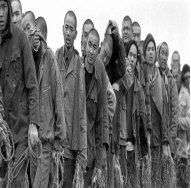
The People’s Republic of China, under the ideological leadership of Mao Zedong, carried out one of the most devastating episodes in modern human history. Scholarly estimates place the number of deaths between 19.5 and 75 million, figures that reveal the extraordinary magnitude of this humanitarian catastrophe. The Great Leap Forward and the Cultural Revolution represent the most emblematic milestones of this policy of social transformation, which resulted in lethal consequences for millions of citizens. These initiatives, conceived as instruments of progress, metamorphosed into mechanisms of mass destruction that decimated and condemned entire generations to death.
Accelerated Genocide (1975–1979) in Cambodia
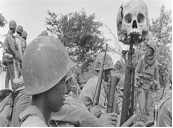
The regime of the Khmer Rouge (KR), led by Pol Pot (supreme leader of the KR, considered one of the most brutal dictators of the 20th century and the chief architect of the Cambodian genocide), perpetrated one of the most intensive genocides in contemporary history. In the span of just four years, approximately one-fourth of the Cambodian population was systematically eliminated, resulting in about two million deaths. This tragedy represents a paradigmatic example of how extremist ideologies can translate into extermination policies that devastate entire societies in relatively short periods of time.
The Lethality of Ethnic Hatred (1994) in Rwanda
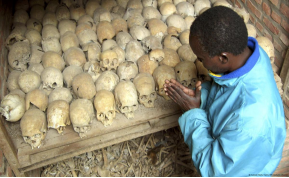
The Rwandan genocide constitutes a horrific demonstration of the speed with which mass violence can erupt in contexts of ethnic polarization. Over approximately one hundred days, a minimum of five hundred thousand people, the majority belonging to the Tutsi minority, were victims of an extermination campaign characterized by its brutality and systematic nature. This episode demonstrates how inter-ethnic conflicts can escalate to genocidal dimensions with a swiftness that challenges the response capacity of the international community.
From this it follows that the thirst for total hegemony constitutes the primary driving force behind phenomena of mass violence, which leave indelible scars on the social fabric of humanity. These devastating episodes merit thorough and systematic analysis, with the purpose of preventing the errors of the past from continuing to perpetuate themselves in future generations.
Detailed Percentage and Statistical Analysis
Reflection on War and Thanatos
Encounter of Two Extraordinary Minds in Times of Crisis: The foregoing evokes the figures of two giants of scientific thought: Albert Einstein and Sigmund Freud. The former experienced the vicissitudes of both the First and Second World Wars, while Dr. Freud endured the horrors of the first global conflict and witnessed the dawn of the second. Both, privileged witnesses of humanity’s destructive capacity, engaged in an epistolary dialogue of historical transcendence.
Epistolary Exchange: Fundamental Questions about Human Nature
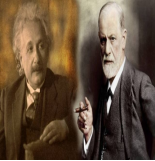
History meticulously documents the letters that Dr. Einstein addressed to Dr. Freud on the eve of the Second World War. These missives contained existential questions that troubled the German physicist: Is there any way to spare humanity the ravages of war? Why does humanity conceive of war as a solution? Why does war exist? These and other equally profound philosophical concerns recurred insistently in Einstein’s correspondence. For a considerable period, his illustrious interlocutor remained in reflective silence, offering no response to such complex questions.
Freudian Response: The Dominion of Thanatos Finally, Dr. Freud replied with a reflection that would shape contemporary thought on war and violence:“In our conversations during the First War you said that war dwelt internally within humanity itself […]. You are right, war will never end, because THANATOS is who governs humanity […]”
Conceptualization of Thanatos: Anatomy of Destructiveness
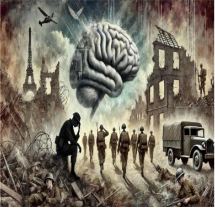
From this correspondence it follows that Thanatos—the death drive—constitutes the personification of destruction, violence, pain, indifference, ruthlessness, horror, terror, hegemony, and death. This primordial force represents the self-destructive impulse inherent to the human condition.
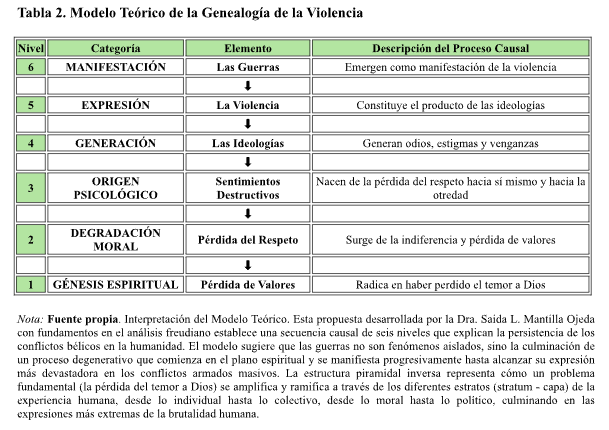
Genealogy of Violence: An Inexorable Causal Chain
Original Theoretical Proposal by Dr. Saida L. Mantilla Ojeda
Between Peace, Violence, and War
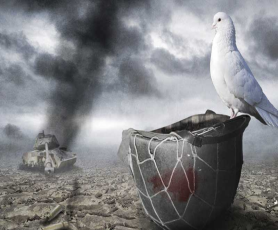
In the perpetual search for the long-desired peace, humanity finds itself immersed in profound agony. Since the dawn of creation and the emergence of the human lineage, the peace so ardently pursued has left a legacy marked more by desolation than by harmony. Violence, with its inherent cruelty, has torn families apart through suffering and comprehensive poverty, especially as a consequence of the tragedy of forced displacement. In this context, femicide has experienced an alarming increase; although it is currently criminally sanctioned, in earlier times such acts were tolerated under the figure of uxoricide.
Crimes as a Pretext for the Price of Peace
Sexual homicides constitute an aberrant manifestation of violence that transcends mere criminality to become an existential affront that rends victims at a psychophysiobiological level, defiling their ontological integrity and plunging their being into an abyss of perpetual vulnerability. Such atrocities arise from the sinister convergence of hegemonic groups whose thirst for dominance condemns them, paradoxically, to dwell in the depths of abject spiritual destitution, revealing themselves as slaves to their own malevolent drives and to a compulsive hedonistic pursuit that transmutes them into agents of Thanatos.
These beings, personifications of the darkest recesses of the human soul, employ ideological sophistries as vehicles of intellectual seduction to ensnare the most fragile and disoriented consciences, thus perpetuating a spiral of devastation that contaminates the social order and spreads far beyond the immediate perimeter of their direct victims.
The current landscape unveils the hegemony of Thanatos, the destructive drive that permeates the human soul and drags the individual toward an inexorable devastation corroding the very foundations of civilized existence. In the face of this grim reality, the maxim of the writer Ellen Key acquires extraordinary relevance: “Everything, everything in war is barbaric. But the worst barbarity of war is that it forces men collectively to commit acts against which individually they would revolt with their whole being.”
Now then, this statement transcends historical coordinates to stand as a universal moral imperative. Consequently, the Swedish wisdom of the author constitutes a direct appeal to the human conscience, urging us, as inhabitants of this fragile terrestrial vessel, toward deep introspection regarding our ethical conduct—regardless of social status, professional vocation, economic solvency, or national origin.
Reflection inevitably leads us to the recognition that any act of violence perpetrated against our fellow human beings represents a capitulation to the Thanatic forces, a betrayal of our existential imperative to preserve and elevate human dignity as the sacred heritage of our species.
Table 3. Comparative Percentage Analysis of Armed Conflicts (cut-off date: August 2025)
![Note: The comparative table reveals three clearly differentiated types of conflict: the Ukrainian-Russian confrontation constitutes a conventional high-intensity war with a predominance of military casualties (98.8%) and exceptional annual lethality (314,286 deaths); meanwhile, the Israeli-Palestinian conflict in Gaza presents an asymmetric war characterized by massive civilian victimization (85.7%) and systematic infrastructural devastation affecting 100% of the territory; and Colombia exemplifies a prolonged irregular war with predominantly civilian victimization (81.9%) but lower annual lethal intensity (7,377 deaths). Patterns of displacement, international humanitarian response, and peacebuilding capacities vary inversely with conflict intensity, where each war scenario exhibits unique configurations that reflect their specific geopolitical and strategic contexts, thereby challenging one-dimensional analytical approaches to contemporary armed violence that consumes humanity. (National Center for Historical Memory [CNMH]. (2013). Enough Already! Colombia: Memories of War and Dignity; Commission for the Clarification of Truth, Coexistence and Non-Repetition [CEV]. (2022). There Is a Future If There Is Truth; Council on Foreign Relations. (2024). Colombia’s Civil Conflict).](https://static.wixstatic.com/media/f2ac96_d2dfcf8823a74ee8b95d4f90386e9cf6~mv2.png/v1/fill/w_578,h_779,al_c,q_90,enc_avif,quality_auto/f2ac96_d2dfcf8823a74ee8b95d4f90386e9cf6~mv2.png)
Human Self-Predation
The diversification of violence is diffuse and increasingly difficult to combat; this behavioral singularity configures the human being as a phylogenetic aberration without precedent: a higher mammal that has metamorphosed intraspecific predation into its principal vector of self-induced extinction. The historical trajectory of humanity, in its deepest essence, constitutes the inexorable testimony of this autophagic capacity, expressed through warlike conflagrations, the systematic extermination of populations, ideological persecutions, and polymorphic manifestations of organized violence.
As Dr. Freud elucidated in his masterful disquisition on the Thanatic drive, this destructive impulse directed toward one’s own species transcends mere aggressiveness to become a defining ontological trait of human nature. This characteristic renders Homo sapiens an extraordinary evolutionary paradox: the species that simultaneously holds intellectual supremacy within the animal kingdom and the most devastating lethal capacity against its own kind—thereby shaping a tragic duality between creative genius and annihilating mastery that defines the destiny of the human condition.
Considerations by Dr. Saida L. Mantilla Ojeda

Thus, Freud’s Thanatos paradigm established a disturbing premise in his celebrated correspondence with Einstein regarding the human condition: “Thanatos is the one who governs humanity,” and war “will never end.” This conceptualization of the destructive instinct as the dominant force in the collective psyche finds a particularly revealing manifestation in the contemporary Colombian context. Colombia presents a disconcerting anomaly that challenges conventional theories of peacebuilding.
Despite exhibiting a 67.8% formal compliance rate in its peace agreements—a statistically significant figure—the empirical reality reveals an alarming resurgence of violence in the post-agreement period. This phenomenon is characterized by the proliferation of impunity and the emergence of new, uncontrollable criminal expressions that have filled the void left by demobilized armed actors. This paradox raises profound questions about human nature and the viability of lasting peace: Does the Colombian case confirm Freud’s thesis that attempts at formal pacification are mere illusions in the face of humanity’s inherent destructive nature? Is it possible that peace processes, far from eradicating violence, simply transform and redistribute it under new modalities? The analysis of this Colombian reality suggests that Thanatos, indeed, may be operating as the underlying force systematically sabotaging peacebuilding efforts, thereby confirming Freud’s pessimistic perspective on the human condition.
Accordingly, the data collected confirm a revealing duality in contemporary manifestations of violence: while the Ukrainian-Russian conflict exhibits the highest annual lethality with 314,286 deaths, Colombia records 450,000 victims over 61 years. These figures expose two contrasting modalities of human devastation that pose fundamental questions about the nature of collective suffering. This empirical reality prompts a crucial reflection: Which poses a greater challenge for humanity—the explosive, high-intensity violence that devastates entire generations in short periods, or the endemic violence that gradually erodes the social fabric over decades, perpetuating intergenerational cycles of trauma and progressively normalizing barbarity?
The answer to this question transcends mere statistical quantification, as it requires evaluating not only the immediate impact of destruction but also the long-term consequences on the collective psyche and on society’s capacity for recovery and rehabilitation. Both modalities of violence represent distinct, yet equally devastating forms of dehumanization that challenge our understanding of the limits of human suffering.
Ultimately, the “Hakuna Matata Syndrome” constitutes an innovative conceptual proposal that identifies a specific form of moral and social decomposition characterized by the permissive attitude of “no problem, everything is permitted.” This degraded ethical architecture has facilitated the systematic perpetuation of violence in contemporary societies. Empirical data reveal a significant correlation between the erosion of absolute values and the increase in the brutalization of armed conflicts. Contexts with the highest levels of civilian victimization—Gaza (85.7%) and Colombia (81.9%)—precisely coincide with scenarios where the fundamental distinction between combatants and non-combatants has been progressively blurred.
This convergence of data raises a crucial question for understanding the dynamics of contemporary violence: To what extent does the loss of absolute values and generalized ethical relativization actively contribute to the brutalization of today’s armed conflicts? Addressing this question is essential to understanding how the disintegration of traditional moral frameworks not only permits but potentially catalyzes the escalation toward increasingly indiscriminate and dehumanizing forms of violence.
Lastly, the historical record reveals a disturbing truth: from the Mongol Empire (1206–1279) to contemporary conflicts, humanity has perpetuated patterns of mass violence with alarming consistency. This empirical evidence suggests that historical knowledge, by itself, has proven insufficient to prevent the recurrence of these collective tragedies.
The theoretical model of the “Genealogy of Violence” identifies the “loss of the fear of God” as the spiritual origin of this destructive phenomenon. From this premise arises a fundamental question for our time: How can the secularized societies of the 21st century build ethical foundations strong enough to fracture this millenary causal chain? Addressing this issue transcends mere academic exercise, as it entails the urgent need to develop alternative moral frameworks with the necessary binding force to prevent “the mistakes of the past from continuing to be perpetuated in future generations.” Only through such a paradigmatic transformation can we aspire to break the historical cycle of violence that has characterized the human experience.


muchas felicidades mi doctora muchos éxitos por esa grande persona y qué bonita dedicación y buenos conocimientos aportándo. Con mucho cariño alumna de la policía Nacional de Los colombianos.
Excellent article that invites us to reflect on how we should redirect our understanding of violence in the world.
Sencillamente, fenomenal mi Doctora, que aporte tan fantástico tan excepcional, que gran dedicación y aporte a la humanidad, mis mas sinceras felicitaciones. Desde Italia, firenze.
Interesting paper and approach of human violent behavior
Excellent research, I agree, human beings have evolved in destruction.